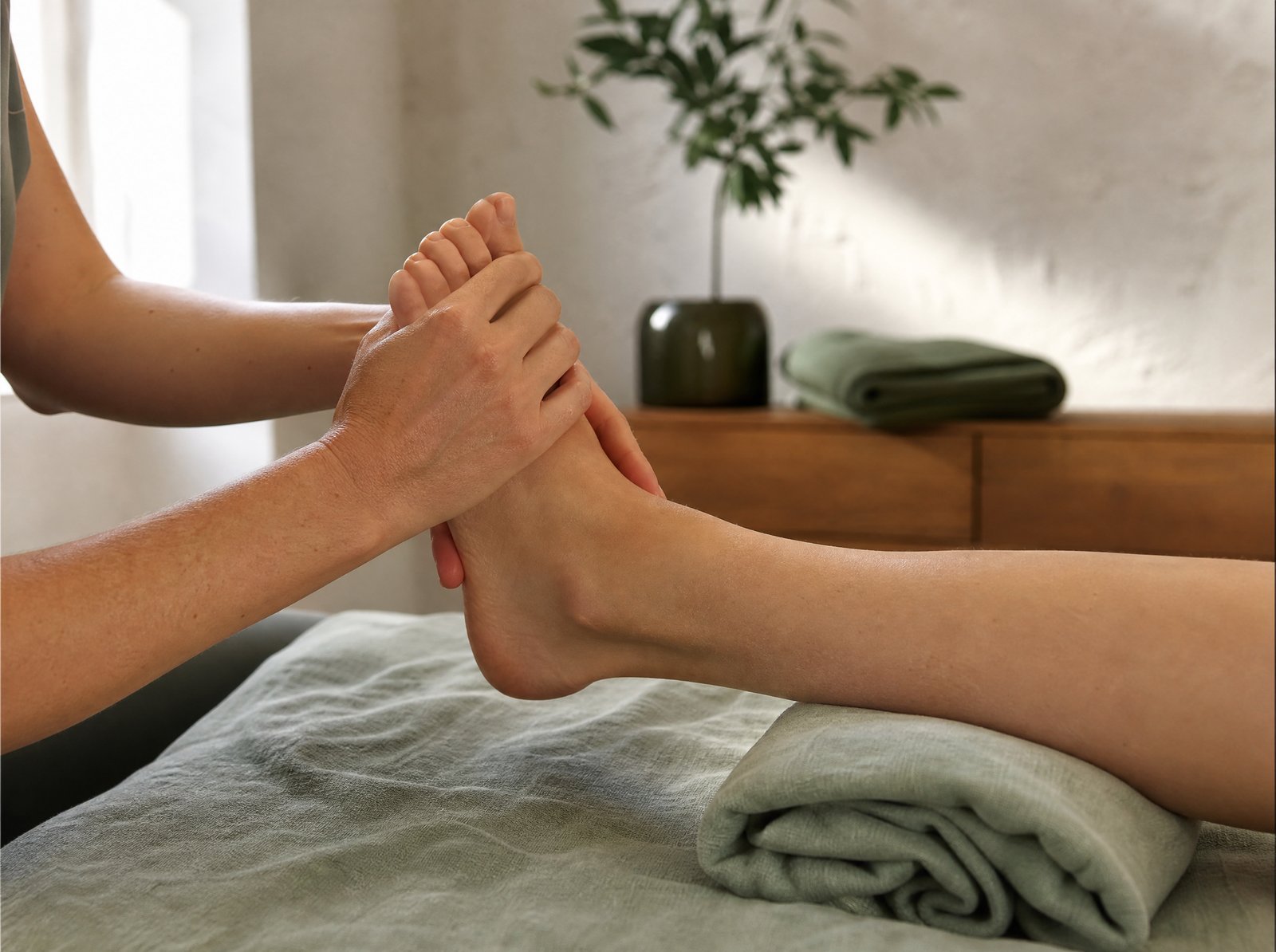
Plantar fasciitis is one of the most common causes of heel pain. It describes irritation of the thick band of tissue under the foot — the plantar fascia — where it attaches to the heel bone.
What does it feel like?
The classic pattern is pain under the heel with your first few steps in the morning or after sitting for a while. It often eases as the foot warms up, then returns after long periods on your feet.
What tends to drive it
It is rarely one single cause. More often it builds up over time, and common contributing factors include:
- A sudden increase in walking, running or standing load
- Time spent on hard surfaces
- Tight calf muscles and reduced ankle movement
- Footwear that offers little support or cushioning
- Higher body weight, which increases load through the foot
None of these mean the tissue is 'broken' — it is overloaded, and the good news is that load can be managed.
What helps
- Ease the load initially — reduce high-impact activity, not all activity
- Calf and foot stretches, done little and often
- Supportive footwear and, where helpful, temporary heel cushioning
- A gradual return to walking, running or standing hours
If pain persists beyond a few weeks despite sensible self-care, an assessment is worthwhile. A physiotherapist can identify which of the factors above matter most for you and build a staged plan around your activity and goals.
Key takeaways
- Heel pain with first steps in the morning is the classic plantar fascia pattern
- It is an overload problem, not a 'worn out' tissue
- Start with load management, stretching and footwear
- If it is not settling in a few weeks, get it assessed — the plan should be tailored to you
Related treatment: Joint, muscle & tendon pain · Biomechanical assessment — book an assessment
This article is general information and is not a substitute for an individual assessment. If you are unsure about your symptoms, or they are not settling, book an appointment or call 087 962 7573.