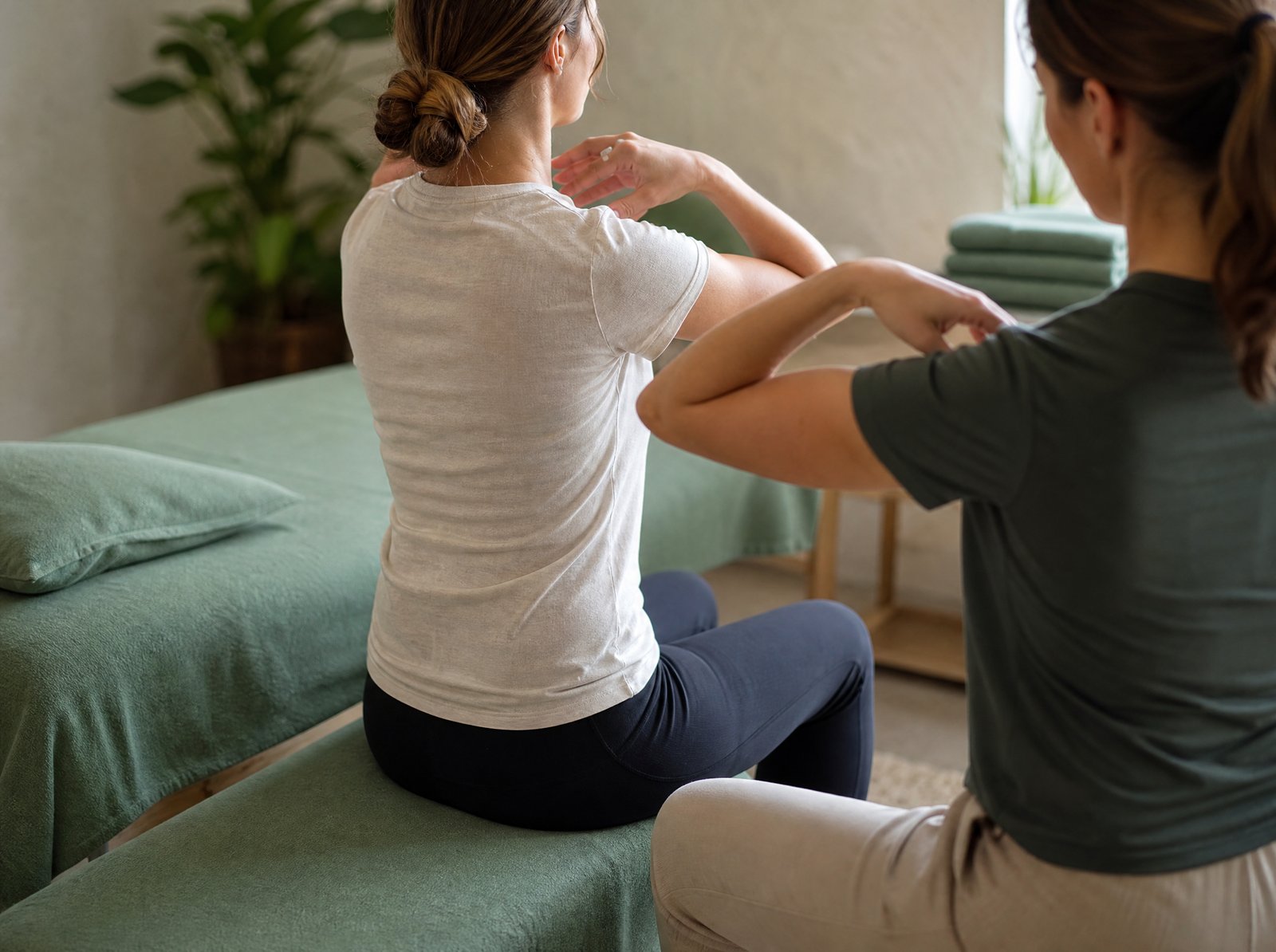
Winter walking around Ennis — along the river, through the town parks or on the country roads of Co. Clare — is excellent for mood, joints and general health. A few small physiotherapy habits make it easier on the body and help you keep the habit all season.
1. Warm up before you step out
Cold muscles are stiffer muscles. Before your first minutes of walking in winter:
- Walk gently inside for a minute or two first — even marching on the spot
- Swing your arms and roll your shoulders
- Finish with a few gentle calf raises and leg swings at the door
Two minutes of warming up makes the first kilometre feel very different — and reduces the chance of that familiar tight-calf start.
2. Footwear matters more in winter
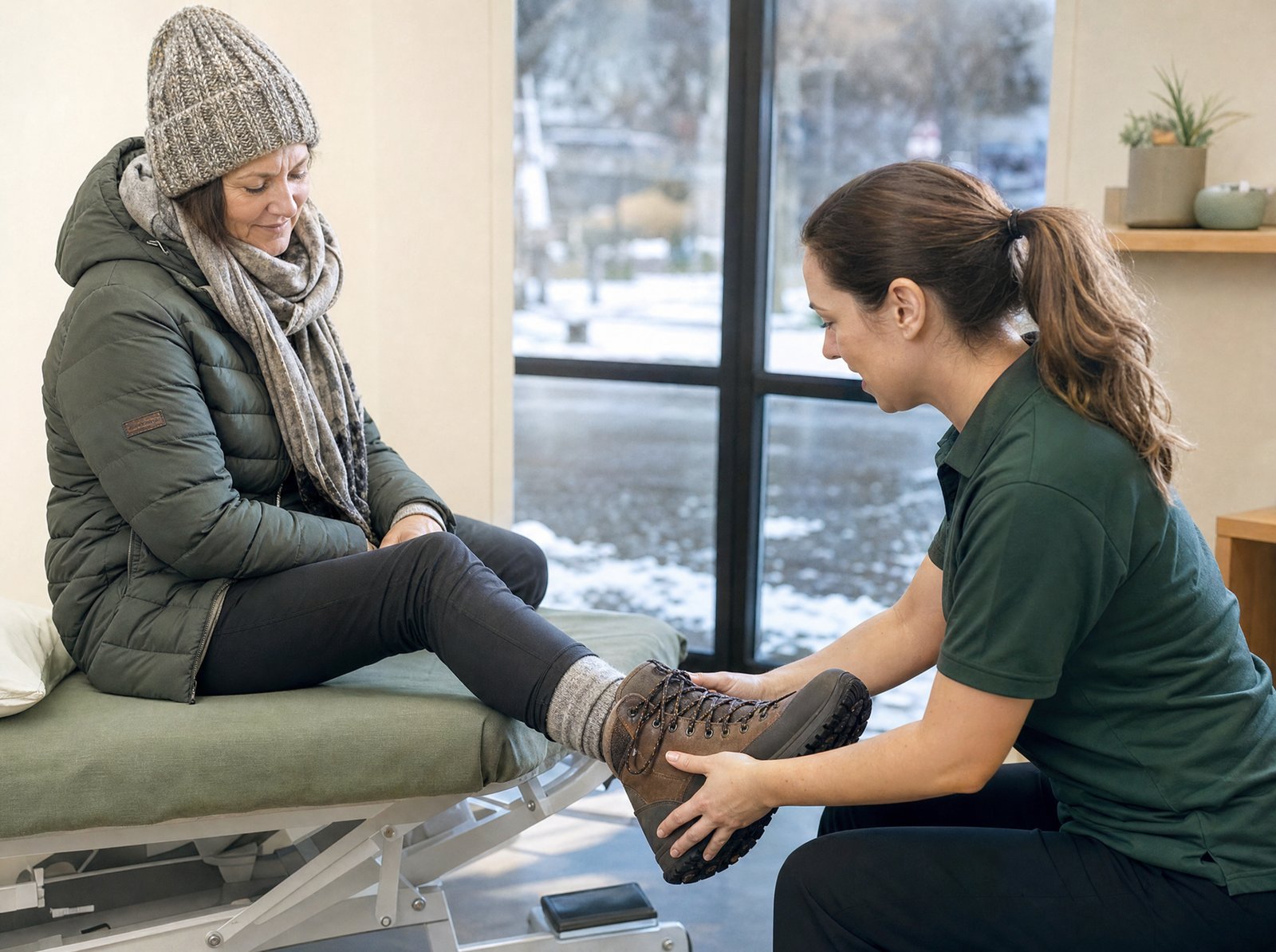
Wet, uneven footpaths around Ennis put extra demands on your feet and ankles:
- Choose shoes with good grip and a tread suited to wet paths
- Look for support through the midsole if you have flat feet or overpronate
- Waterproof boots with ankle support are worth it on wet weeks
- Replace worn soles — a smooth shoe on a wet footpath is an ankle sprain waiting to happen
3. Watch for wet leaves and black ice
Ankle sprains are the most common winter walking injury in Ireland. On icy or leaf-covered mornings:
- Slow down on shaded stretches and at gates
- Keep your core engaged and weight slightly forward
- Walk on the gritted or salted sections where available
- If you do twist your ankle, follow the RICE-style first aid — protect, ice, compress, elevate — and get it checked if you cannot bear weight
4. Keep the rest of the body comfortable
Cold weather makes us hunch. Pay attention to:
- Shoulders relaxed, chest open — let the arms swing naturally
- Looking up and ahead, not at your feet the whole time
- Layers you can move in — restricted jackets can limit arm swing and load the neck and shoulders
5. If you have a niggle, do not push through it
The 'little twinge' that settles as you warm up is common. But pain that gets worse as you walk, or a repeated problem in the same foot, ankle or knee, is worth having assessed — especially before the longer walks of spring.
Key takeaways
- A two-minute indoor warm-up changes the whole walk
- Grip, ankle support and fresh soles protect ankles on wet Irish footpaths
- Slow down on icy and leaf-covered surfaces
- Persistent or worsening foot, ankle or knee pain deserves an assessment, not another month of walking through it
Related treatment: Joint, muscle & tendon pain · Biomechanical assessment — book an assessment
This article is general information and is not a substitute for an individual assessment. If you are unsure about your symptoms, or they are not settling, book an appointment or call 087 962 7573.