Gaelic football and hurling place huge demands on the body — sprinting, sudden stops, twisting, collisions and high-volume training. If you play GAA in Ennis, Shannon or anywhere across County Clare, you will be familiar with the weekly grind of club training and matches.
The injuries Clare GAA players see most often
- Hamstring strains — the classic sprinting injury, especially early or late in the season when running load jumps up
- Ankle sprains — from landing, twisting on wet turf and collisions
- Knee injuries — from pivoting, with ligament and cartilage problems more common in Gaelic football
- Shoulder injuries — from tackles, falls and the physical demands of both codes
- Groin and hip issues — common in kicking sports, often building up gradually rather than from one moment
The pattern matters as much as the injury itself. A hamstring that keeps pulling in the same place is a different problem to a first-time strain — but both respond to a structured plan.
Why seeing a physio early helps a GAA player
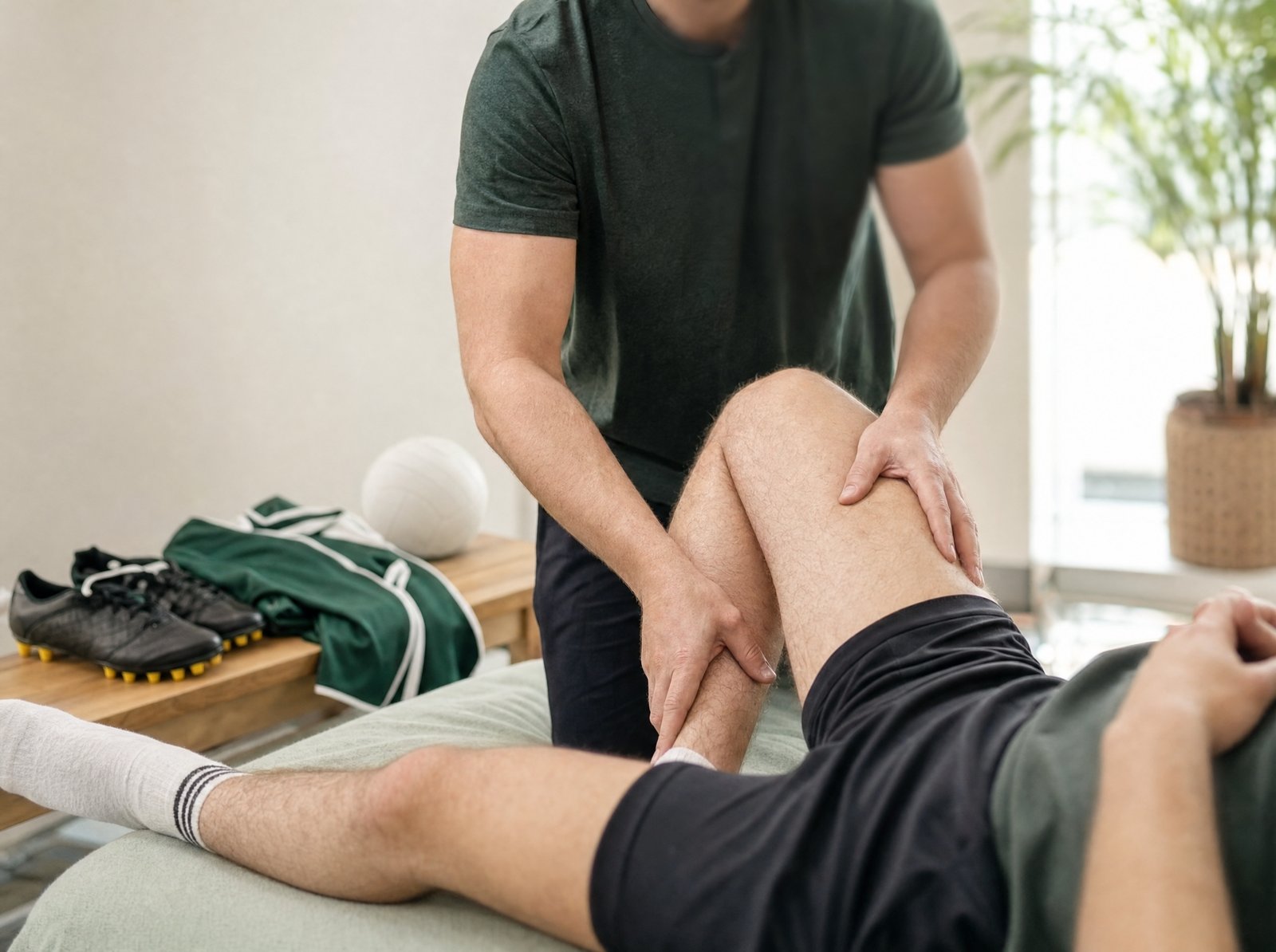
A physiotherapist in Ennis who works with GAA players (and Fiona has worked across rugby and GAA for years) will assess more than the sore spot:
- How the injury happened and what was different that day
- Strength, range and control around the area, not just pain levels
- Your training load — often the real culprit behind repeated injuries
- A return-to-play plan with clear milestones, so you are not left guessing when to come back
Getting assessed early typically means a shorter layoff — and a plan that reduces the chance of the same injury returning next month.
What you can do at the moment of injury
For a muscle or ligament injury in the first 48–72 hours:
- Protect the area and avoid activities that cause sharp pain
- Ice the area for 10–15 minutes a few times a day
- Compress and elevate where possible (ankle, knee)
- Keep moving within comfort — a little walking is usually fine; bed rest is not
Avoid the temptation to 'run it off' — a player who returns too early often ends up out for much longer.
Key takeaways
- Hamstrings, ankles, knees, shoulders and groins are the areas Clare GAA players most commonly present with
- Repeated injuries are usually a load or strength problem, not bad luck
- An early assessment with a return-to-play plan shortens layoffs
- If it is not improving in a few days, or you cannot put weight through it, get it checked
Related treatment: Sports injuries · Prehabilitation & pre-screening — book an assessment
This article is general information and is not a substitute for an individual assessment. If you are unsure about your symptoms, or they are not settling, book an appointment or call 087 962 7573.